
Mukteshwar has become one of Uttarakhand’s most desirable destinations for second homes, mountain villas, holiday residences and long-term property investments. Its peaceful surroundings, Himalayan views, pleasant climate and improving connectivity have attracted buyers from Delhi-NCR, Mumbai, Bengaluru and other parts of India.
However, buying property in the mountains requires more than choosing an attractive view or a beautifully designed villa. Mountain properties involve several important considerations, including land ownership, legal documentation, road access, slope stability, drainage, construction quality, water availability, electricity, maintenance and future usability.
A property may look perfect during a short visit, but the real quality of the purchase depends on what exists behind the view. Proper due diligence helps buyers understand exactly what they are purchasing, whether the property can legally be used for its intended purpose and whether it will remain practical and valuable over time.
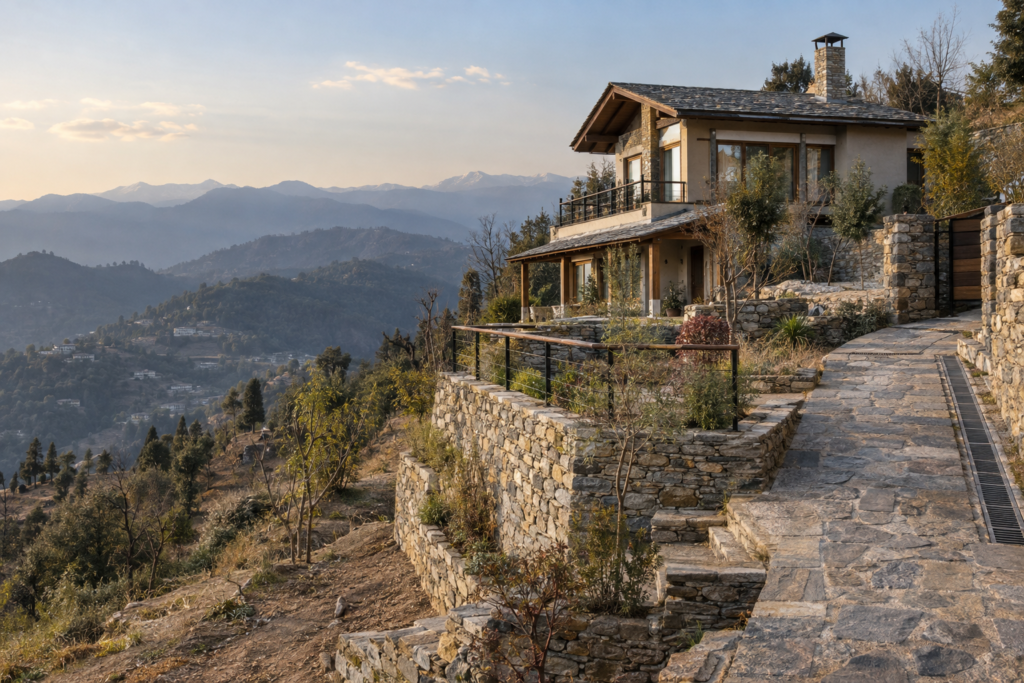
This complete checklist explains the most important factors buyers should examine before purchasing property in Mukteshwar.
Understand Your Purpose Before Buying
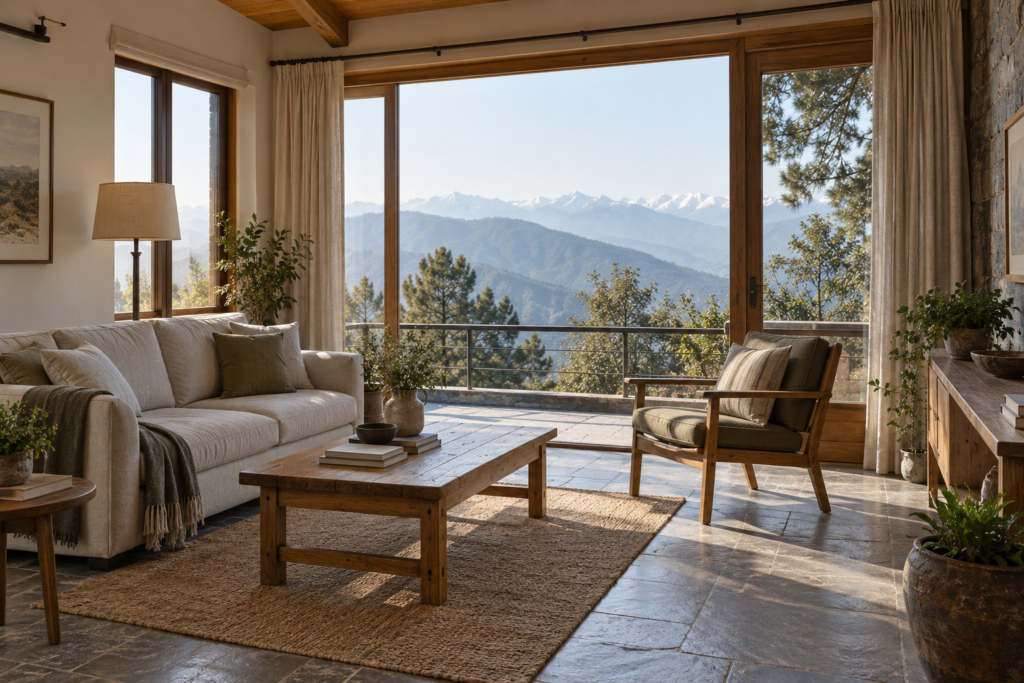
The first step is to clearly define why you want to buy property in Mukteshwar.
Some buyers want a peaceful second home where their family can spend weekends and holidays. Others may be looking for a retirement residence, a holiday home, a rental property or a long-term investment. Some buyers prefer purchasing a plot and constructing a home according to their preferences, while others want a ready-to-move-in villa with maintenance and management support.
Your purpose will influence almost every decision, including:
- The location you choose
- The size of the property
- The type of construction required
- The level of maintenance support
- The importance of rental potential
- The distance from markets and essential services
- Your preferred budget and holding period
A property selected for personal use may be chosen for privacy, peace and views, while a property intended for rentals may require better accessibility, professional management and stronger visitor demand.
Do Not Choose a Property Only for Its View
A mountain view is attractive, but it should never be the only reason to purchase a property.
Views can change because of future construction, tree growth, weather conditions or changes in surrounding land use. A property should be evaluated as a complete asset rather than as a photograph.
Before making a decision, examine:
- The direction of the view
- Whether the view is likely to remain open
- The distance from neighbouring buildings
- The availability of direct road access
- The condition of the surrounding land
- The possibility of future construction
- The amount of usable outdoor space
- The privacy offered by the site
A good mountain property should combine an attractive setting with practical access, reliable services, sound construction and clear documentation.
Verify the Ownership and Title of the Property
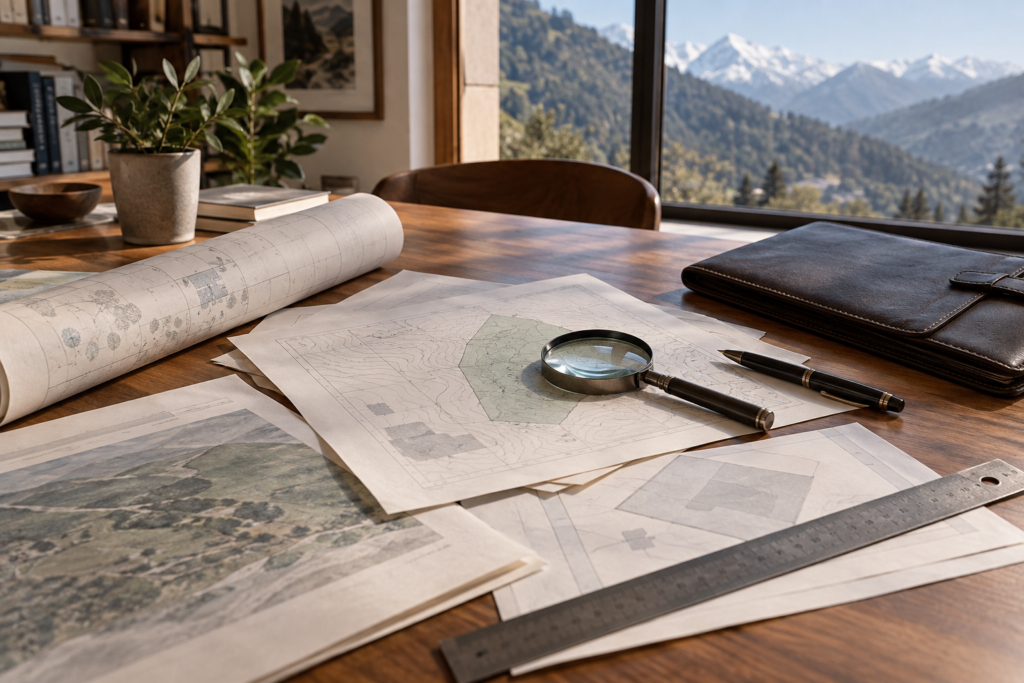
One of the most important parts of due diligence is confirming that the person or organisation selling the property has the legal right to sell it.
Buyers should carefully review the ownership documents and verify that the seller’s name matches the official records and identity documents provided. If the property is being sold by a company, partnership, trust or authorised representative, the buyer should confirm that the person signing the transaction has the legal authority to complete the sale.
Important documents may include:
- Previous sale deeds
- Current title deed
- Registered conveyance deed
- Mutation records
- Revenue records
- Identity and address documents of the seller
- Power of attorney, where applicable
- Succession or inheritance documents, where relevant
- Company authorisation documents, where applicable
The ownership history should be reviewed carefully to determine whether the title has passed correctly from one owner to another. A property lawyer should examine the chain of ownership and identify any gaps, disputes or inconsistencies before the buyer pays a substantial amount.
Check for Encumbrances, Loans and Legal Disputes
A property may appear to have a clear title while still being subject to a loan, mortgage, court dispute, family claim or other legal restriction.
Buyers should ask for an encumbrance check and confirm whether the property is free from:
- Bank loans or mortgages
- Pending litigation
- Family ownership disputes
- Claims by previous owners
- Government acquisition notices
- Tax or revenue dues
- Lease restrictions
- Unresolved inheritance matters
- Agreements with third parties
If the property has ever been mortgaged, the seller should provide proof that the loan has been fully repaid and that the charge has been formally removed from the records.
Never rely only on verbal assurances. All important claims should be supported by documents and reviewed by an independent legal professional.
Confirm the Permitted Land Use
Land in the hills may have different classifications and permitted uses. A piece of land may not automatically be suitable for residential construction, commercial activity, hospitality operations or short-term rentals.
Before proceeding, buyers should verify:
- The current land-use classification
- Whether residential construction is permitted
- Whether land-use conversion is required
- Whether the proposed construction complies with local planning rules
- Whether the property is located within a restricted or regulated area
- Whether there are limitations on commercial use
- Whether permissions are required for construction or development
- Whether the proposed use is permitted under applicable regulations
This is especially important for buyers who plan to construct multiple units, operate a holiday rental, develop a hospitality property or make structural changes in the future.
Land-use rules and permissions can vary depending on the location and nature of the property. Buyers should obtain current confirmation from the relevant authorities and take professional legal advice before finalising the purchase.
Verify the Exact Plot Boundaries and Area
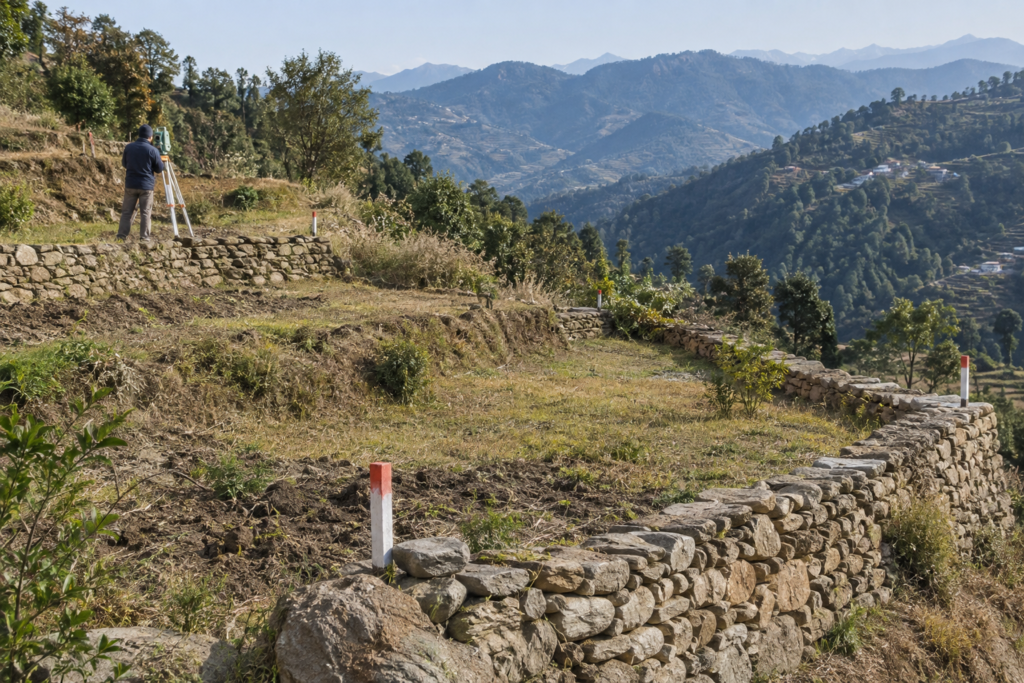
The area mentioned in a brochure or sales presentation should always be matched with the official documents.
Buyers should confirm:
- The total plot area
- The built-up area
- The carpet area
- The location of the boundaries
- The ownership of adjoining land
- The position of access roads
- The location of retaining walls
- The area included in the sale
- Any shared or common portions
- Any easements or right-of-way arrangements
A professional survey may be necessary to confirm the physical boundaries on the ground. In hilly terrain, the visual appearance of a plot can sometimes be misleading because of slopes, levels and irregular boundaries.
Buyers should also understand whether the quoted area refers to horizontal land area, sloping land area, super built-up area or another measurement. These terms should be clearly defined in the sale documents.
Inspect Road Access and Right of Way
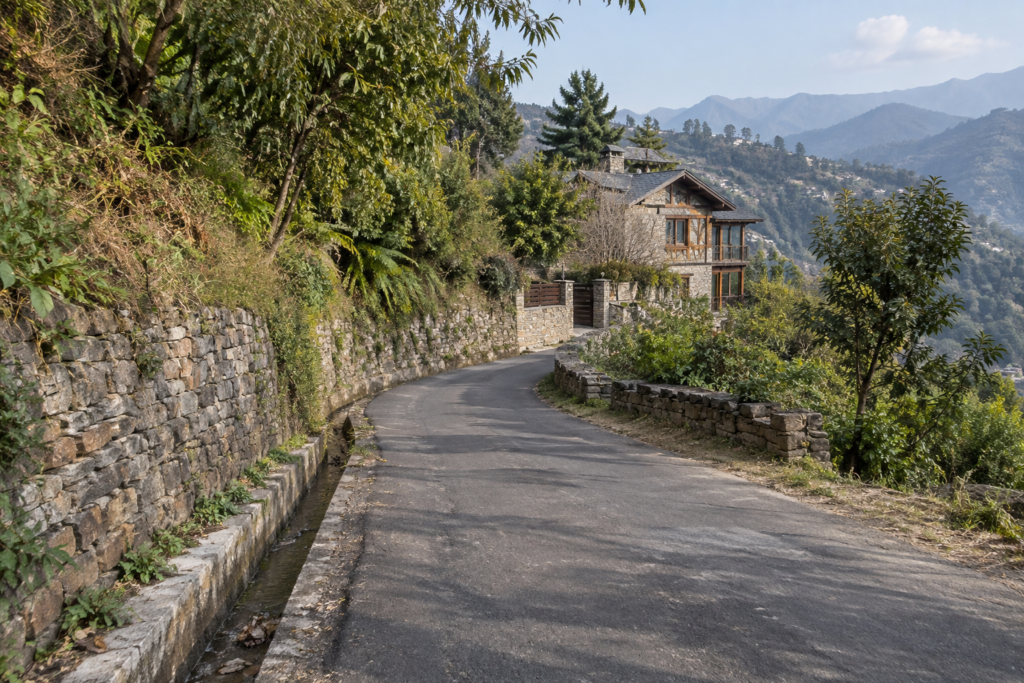
Road access is one of the most important practical factors when buying property in Mukteshwar.
A property may be marketed as road-connected, but the actual access may involve a narrow lane, steep gradient, private road or shared route. During the monsoon and winter months, access conditions may become more difficult.
Buyers should personally inspect:
- The final approach road
- Road width
- Road ownership
- Road maintenance responsibility
- Turning space for vehicles
- Parking access
- Emergency vehicle access
- Drainage along the road
- Access during heavy rain or snowfall
- Private road permissions
- Right-of-way arrangements
If access passes through another person’s land, the right of passage should be legally documented. A verbal understanding may create difficulties later, especially when the property is sold, inherited or developed.
Evaluate Water, Electricity and Internet Availability
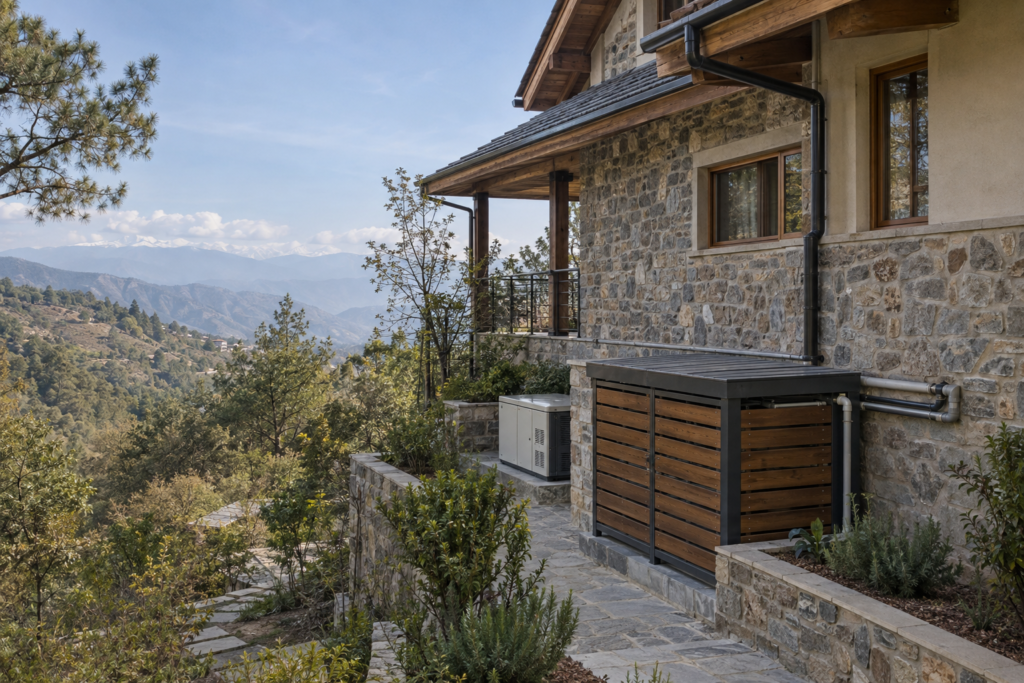
Mountain properties require dependable basic services. Buyers should not assume that a beautiful location automatically offers reliable utilities.
Before purchasing, ask for clear information about:
- The source of water
- Water storage capacity
- Water supply during dry months
- Rainwater harvesting arrangements
- Electricity connection
- Backup power
- Internet availability
- Mobile network coverage
- Sewage and wastewater disposal
- Garbage collection
- Heating requirements
For a second home, water storage and remote monitoring can be particularly important because the house may remain unoccupied for long periods.
If the property is part of a managed development, buyers should understand who is responsible for maintaining water systems, electricity backup, roads, security and common infrastructure.
Examine Drainage and Rainwater Management
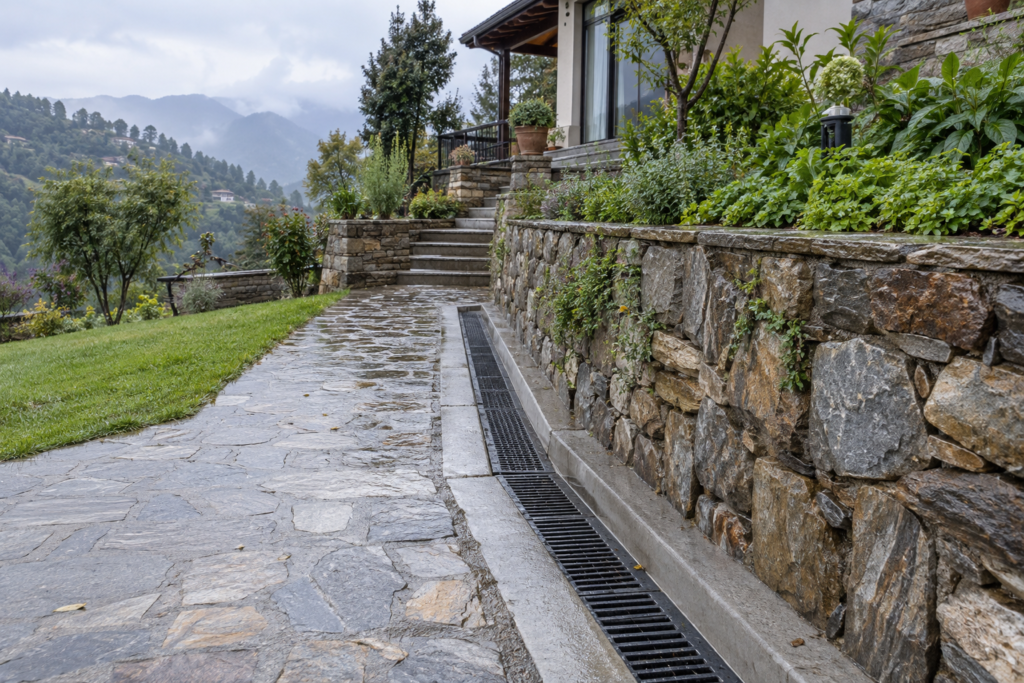
Drainage is a critical factor in any mountain property.
Heavy rainfall can create waterlogging, soil erosion and pressure on retaining structures if the site has not been planned properly. Surface water should be directed safely away from the building, access roads and neighbouring properties.
Inspect whether the property has:
- Proper surface drainage
- Covered or open drainage channels
- Safe rainwater outlets
- Retaining walls
- Slope protection
- Foundation-level protection
- Stormwater management
- Protection from water flowing down from higher land
- Safe discharge points
Buyers should be cautious if they notice damp walls, exposed soil erosion, cracked retaining walls, damaged pathways or uncontrolled water flow.
A qualified civil engineer can provide a more reliable assessment of the site than a visual inspection alone.
Assess Construction Quality Thoroughly
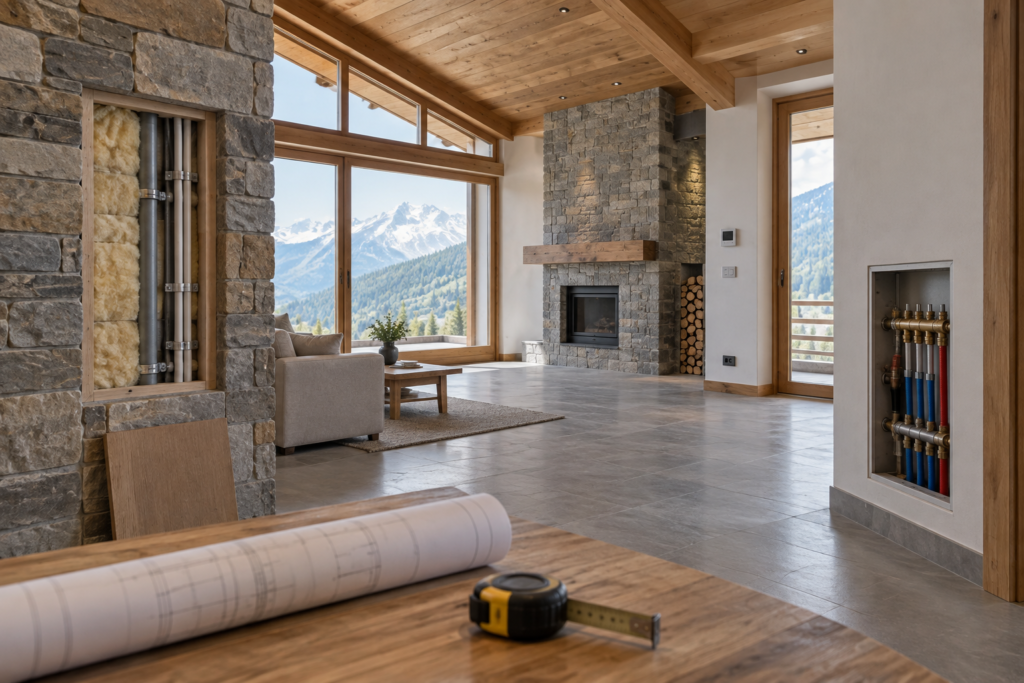
A property may look attractive because of its stonework, woodwork and interior finishes, but the most important elements are often hidden.
Before purchasing a constructed villa or residence, inspect:
- Foundation quality
- Structural framework
- Roof construction
- Waterproofing
- Wall insulation
- Window and door quality
- Plumbing
- Electrical wiring
- Heating provisions
- Bathroom ventilation
- Kitchen fittings
- Flooring
- Terrace and balcony waterproofing
- Quality of retaining walls
- Construction response to local weather conditions
Ask for information about the architect, contractor, construction timeline and materials used. If possible, arrange an independent inspection by a qualified architect or civil engineer.
Do not treat decorative finishes as proof of structural quality. A well-designed mountain home should be built for the local climate, terrain and maintenance requirements.
Review All Approvals and Completion Documents
Buyers should confirm that the property has the necessary approvals and that the construction matches the approved plans.
Depending on the nature of the property, relevant documents may include:
- Approved building plans
- Construction permissions
- Completion certificate
- Occupancy certificate, where applicable
- Electricity and water connection documents
- Local authority approvals
- Fire and safety approvals, where applicable
- Environmental or development permissions, where applicable
- RERA-related information, if applicable to the project
The actual property should match the approved plans and the description in the agreement. Unapproved additional floors, rooms, terraces or structures may create legal and financial complications in the future.
Understand the Complete Cost of Ownership
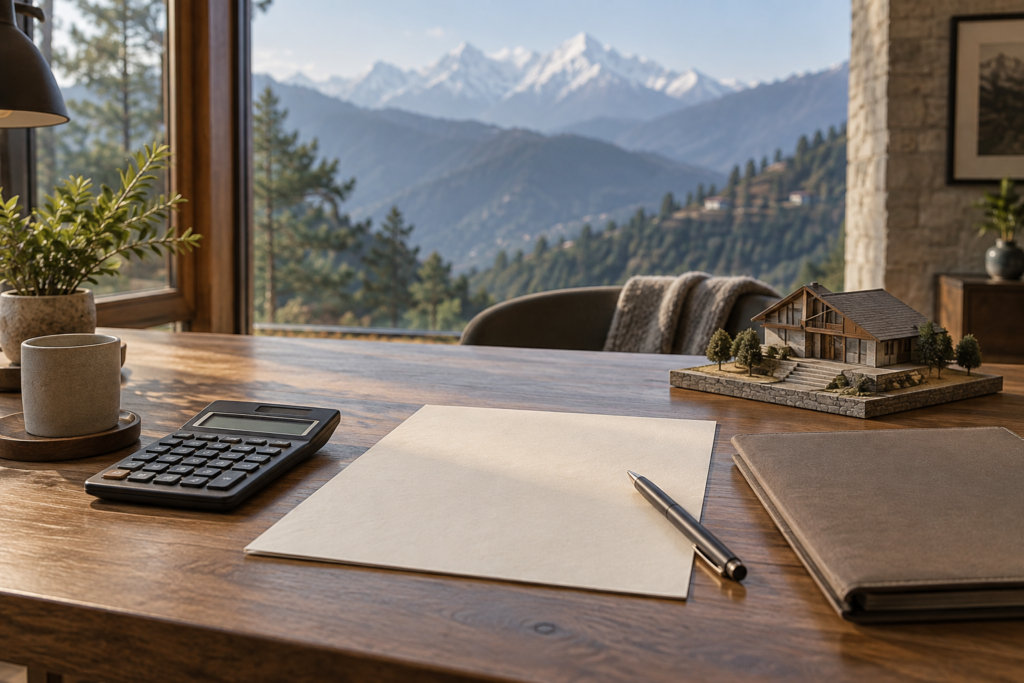
The purchase price is only one part of the total cost.
Before buying, prepare a complete cost estimate that includes:
- Property price
- Stamp duty
- Registration charges
- Legal fees
- Documentation expenses
- Brokerage, where applicable
- Maintenance charges
- Security charges
- Electricity and water deposits
- Property taxes
- Insurance
- Interior work
- Furniture and appliances
- Repairs and upgrades
- Travel and management costs
- Rental management fees, if applicable
If the property is part of a managed development, ask for a written schedule of maintenance charges and understand what is included.
Clarify whether the charges cover security, landscaping, road maintenance, common lighting, housekeeping, repairs, utilities or property management.
Do Not Rely on Unwritten Rental Promises
Some mountain properties are promoted with rental income projections. Buyers should treat these figures as estimates rather than guaranteed returns unless the arrangement is formally documented.
Before considering rental potential, ask:
- Who will manage the property?
- What is the expected occupancy basis?
- Are the figures gross or net?
- What expenses will be deducted?
- Who pays for repairs and replacement?
- What happens during the owner’s personal use?
- Is a rental agreement available?
- Are there restrictions on short-term rentals?
- How will taxes and compliance be handled?
- Is the rental estimate based on actual performance or only a projection?
A realistic evaluation should consider seasonality, access, competition, maintenance quality, online visibility and the overall guest experience.
Read the Agreement Before Paying the Final Amount
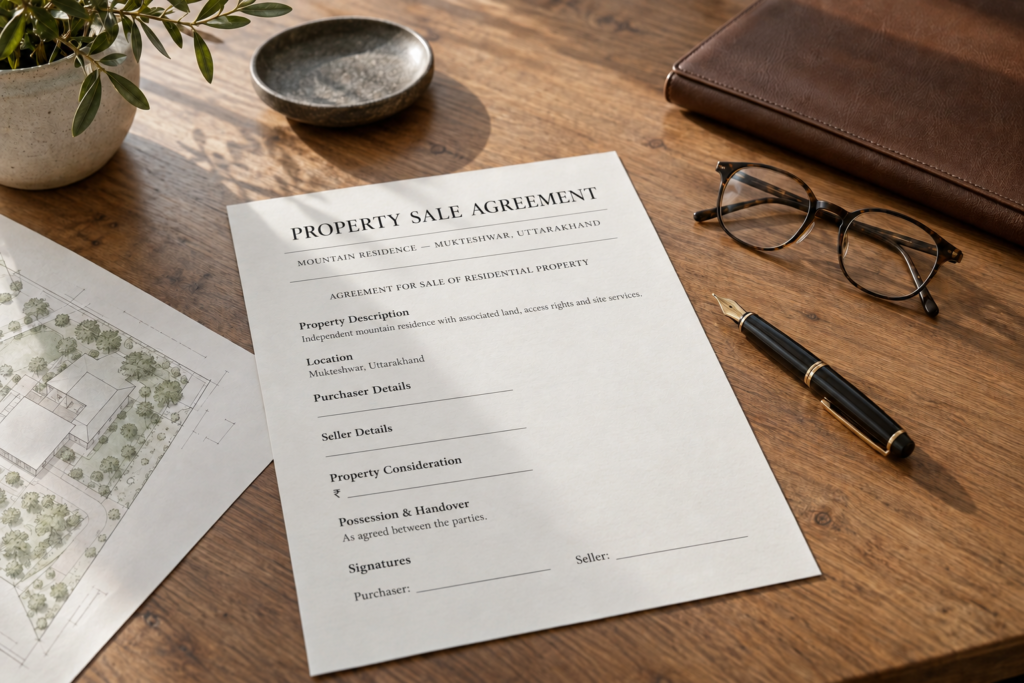
The sale agreement should clearly mention every important promise and obligation.
It should cover:
- Names of the parties
- Exact property description
- Plot and construction details
- Total consideration
- Payment schedule
- Possession date
- Included fixtures and fittings
- Parking rights
- Maintenance obligations
- Delay provisions
- Cancellation terms
- Refund conditions
- Registration responsibilities
- Defect liability
- Dispute-resolution process
- Common-area rights
- Future maintenance arrangements
Do not sign a document that contains unclear language, blank spaces or verbal promises that are not included in writing.
All payments should be made through traceable banking channels, and buyers should maintain copies of receipts, communications, approvals and agreements.
Plan for Long-Term Maintenance
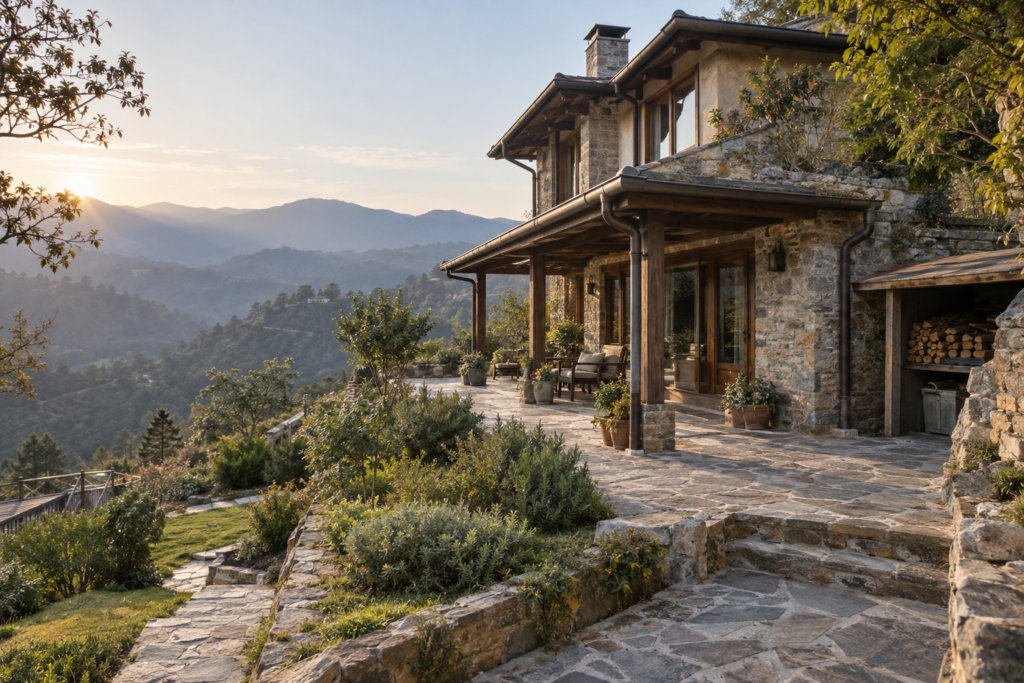
A mountain residence needs regular care, even when it is not occupied.
The buyer should understand how the property will be maintained during periods of absence. Important questions include:
- Who will inspect the house?
- Who will manage leaks and plumbing issues?
- Who will clear leaves and debris?
- Who will maintain the garden?
- Who will monitor electricity and water systems?
- Who will respond to emergencies?
- How often will the property be inspected?
- What is the cost of annual maintenance?
A well-managed property can remain in good condition for years, while an unattended property may develop problems related to moisture, insects, plumbing, vegetation and weather exposure.
Visit the Property in Different Conditions
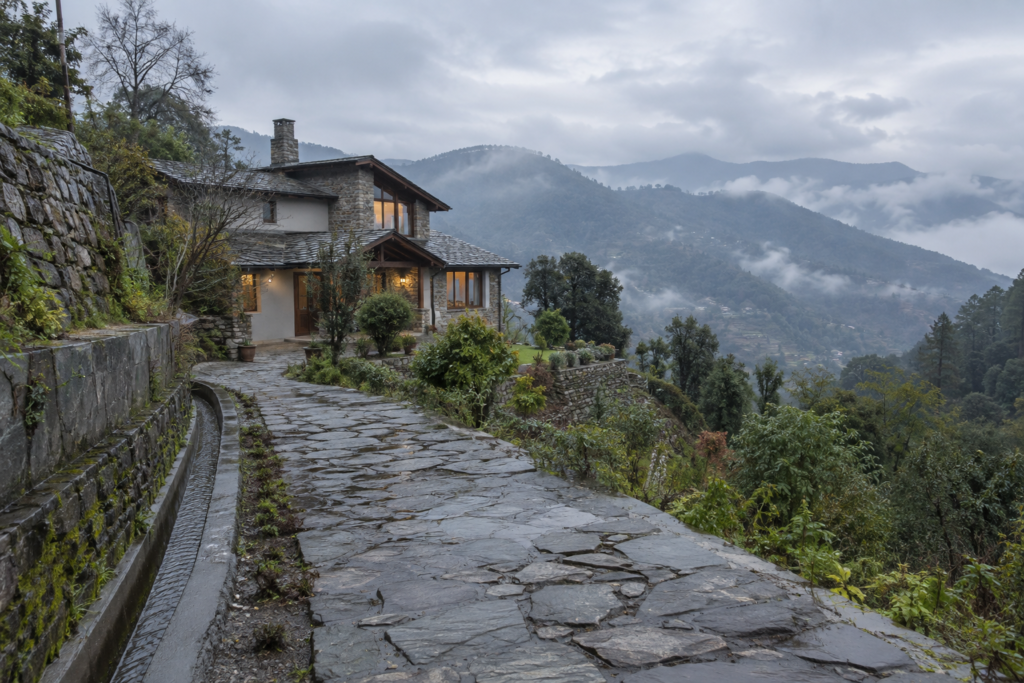
Whenever possible, visit the property more than once and at different times of the year.
A sunny afternoon may not reveal:
- Monsoon drainage issues
- Winter temperatures
- Fog and visibility conditions
- Road access challenges
- Water shortages
- Neighbourhood noise
- Construction activity
- Network limitations
- Maintenance difficulties
Speak with nearby residents and ask practical questions about the locality, road conditions, water supply, nearby services and seasonal changes.
Make an Independent Decision
A property purchase should be based on verified information, not pressure, emotion or urgency.
Before making the final decision, compare the property with other options in terms of:
- Legal clarity
- Location
- Accessibility
- Construction quality
- Services
- Maintenance
- Privacy
- Price
- Long-term usability
- Resale potential
A responsible seller or developer should be willing to answer questions clearly and provide relevant documentation for independent review.
Conclusion
Buying property in Mukteshwar can be a meaningful long-term decision when the property is selected with patience, proper research and professional guidance.
The right property is not simply the one with the most impressive view. It is the one with clear ownership, reliable access, sound construction, suitable land use, dependable services, transparent costs and a practical long-term maintenance plan.
Before signing any agreement, buyers should verify the legal documents, inspect the physical property, understand the complete financial commitment and obtain independent advice wherever necessary.
A thoughtful purchase process protects your investment and helps ensure that your mountain property remains a place of comfort, security and lasting value.
If you are exploring thoughtfully planned plots and constructed villas in Mukteshwar, Global Investors can help you understand the location, property details, development features and ownership process more clearly.
Contact Global Investors to begin a more informed conversation about finding the right mountain property for your needs.